Prioritising cybersecurity: A strong start to 2026
The start of the year is a natural moment for many organisations to take stock. Strategies are reviewed, priorities are reassessed, and plans are set. This is also the point where an important question arises: Where does our cybersecurity stand today, and where should we focus next?

Cybersecurity continues to be one of the central business risks. Cyberattacks are no longer isolated incidents. They affect organisations of all sizes and across all industries. At the same time, day-to-day operations often leave little room to take a structured look at the organisation’s security posture. The beginning of a new year offers a good opportunity to pause and create clarity.
Why taking stock makes sense
Across many SMEs, a similar picture emerges: individual security measures, tools or policies exist, but a clear overall view is often missing.
Typical questions include:
- Where do we really stand today?
- Which risks are relevant for our organisation?
- Where does investment make sense, and where does it not (yet)?
Without this context, there is a risk of implementing measures that require significant effort but deliver limited impact. A structured assessment helps organisations use limited resources more effectively and set priorities consciously, rather than reacting in isolated ways.
This is not about analysing every system in detail or introducing new solutions immediately. What matters is transparency. Which systems are visible from the outside? What dependencies exist on IT service providers? And where are the real risks in the current setup?
From risk to a basis for decision-making
Cyber risks are closely linked to operational, financial and legal considerations. A security incident can disrupt business operations, trigger regulatory consequences, and undermine trust among customers, partners and employees.
What matters most is the ability to assess risks and make informed decisions. This requires a realistic picture of the organisation’s current situation.
For organisations seeking exactly this transparency, different entry points are available. Depending on the specific question and maturity level, a strategic or a technical approach may be appropriate.
The Cybersecurity Check for SMEs
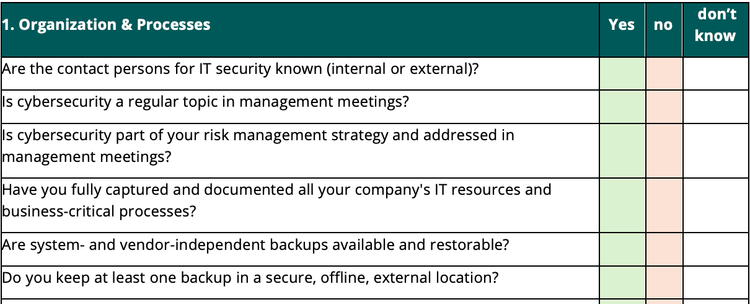
The Cybersecurity Check for SMEs helps organisations classify organisational and strategic areas of action. It supports the clear prioritisation of risks and provides a structured view of key topics such as processes, responsibilities, employees, technology and external partners.
As a free self-assessment, the guide is particularly suitable for organisations that want an initial overview without requiring technical expertise.
Attack Surface Analysis (ASA)
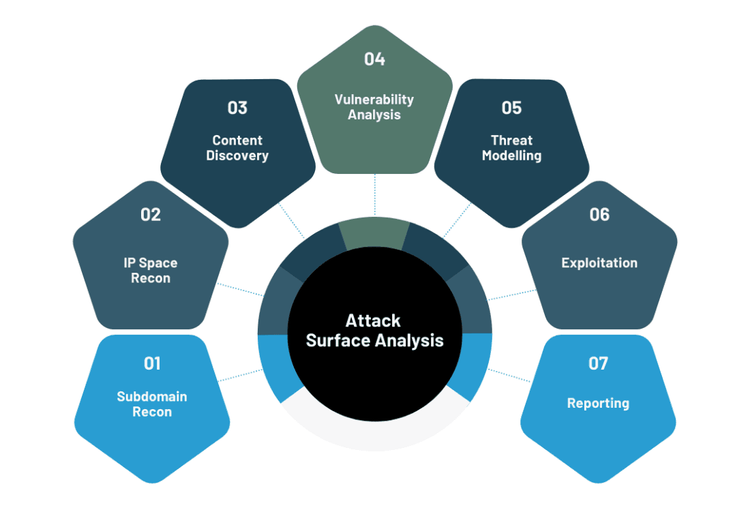
The Attack Surface Analysis (ASA) complements this approach with a technical outside perspective. It identifies which systems, services and interfaces are visible from the outside and therefore potentially exposed to attack. Forgotten subdomains, old test systems or external services often go unnoticed in day-to-day operations and can become entry points for attackers.
ASA combines an automated scan of publicly accessible systems with vulnerability checks, including CVE assessments, and an additional review by experienced security experts. The analysis covers, among other things, domains, subdomains, IP ranges, cloud services and exposed services. The result is a structured report with prioritised findings and concrete remediation recommendations.
Many SMEs particularly value the independent external view. Even when an IT service provider manages firewalls, keeps systems up to date and applies security updates, a certain level of uncertainty often remains. ASA serves as a neutral reality check and creates transparency, both internally and in collaboration with IT partners.
Both approaches pursue the same goal: a realistic assessment of the current situation, forming the basis for meaningful next steps. While the SME guide primarily supports orientation and prioritisation, ASA provides a well-founded technical assessment of actual external exposure.
What comes after taking stock?
An assessment is not an end in itself. It forms the foundation for concrete decisions. Which measures are sensible in the short term? Where is there a medium-term need for action? And which topics can consciously be deferred?
For SMEs in particular, this prioritisation is essential to balance security and effort. Not everything needs to be implemented immediately. But the essentials should be known.
Small steps, clear priorities
Cybersecurity does not have to be a large-scale project. Often, a single clear first step is enough to make risks visible and act in a targeted way.
The start of the year is a good moment to:
- consciously review the organisation’s security status,
- realistically assess risks,
- and define priorities for the year ahead.
Not as a box-ticking exercise, but as a foundation for well-informed and sustainable decisions.
A good resolution for the new year
Start your structured cybersecurity assessment now with an Attack Surface Analysis from GObugfree.